
CartoonNext 2026: Where Animation Is Headed

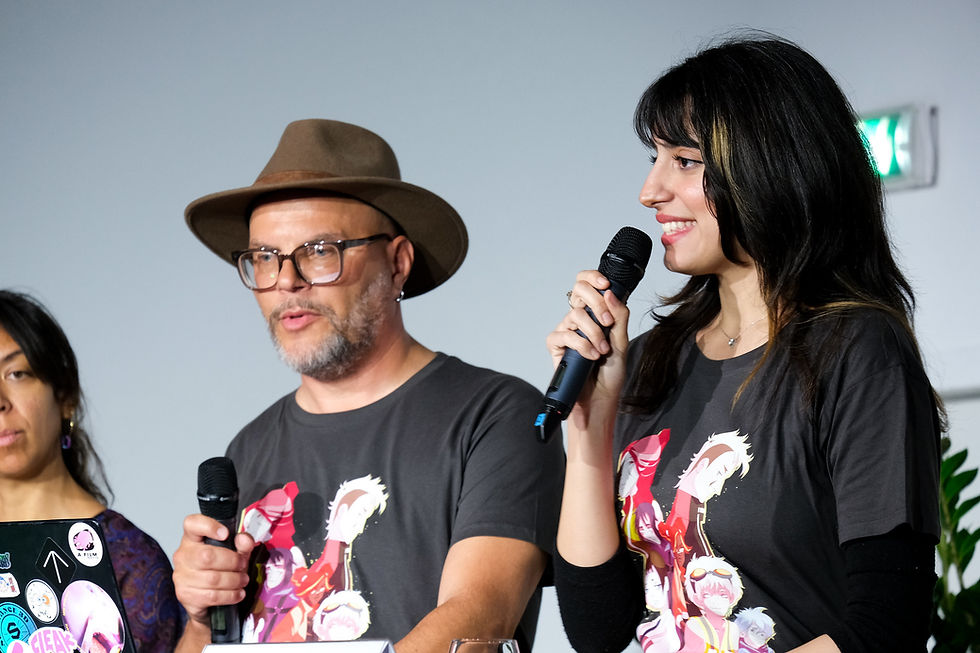
CartoonNext in Marseille this April made one thing very clear. The industry is not just evolving, it’s reorganising itself.
There were over 260 professionals from 25 countries, but the real value was in the direction of the conversations. Across keynotes, panels and meetings, the same themes kept coming up: speed, flexibility, audience proximity and new ways of building IP.
Something is shifting in how projects get made. More importantly, in how they get tested.
From long development to fast iteration
One of the clearest shifts is the role of short-form animation.
Micro dramas, from a few seconds up to around a minute, are now being used to test worlds, characters and tone. Instead of developing for years behind closed doors, creators are putting ideas out early and seeing what actually connects.
This is not replacing long-form storytelling. It’s changing how you get there.
You test, you learn, you adjust and then you scale.

UGC is part of the process now
UGC and community feedback are no longer just marketing.
They are part of development.
Audiences react, comment, share and in some cases reshape the content. Especially with younger audiences, this is already standard behaviour.
That shifts the role of the studio. You are not just delivering a finished piece. You are managing something that evolves in public.

AI is becoming infrastructure
AI was everywhere, but the tone has clearly changed.
Less hype, more practical use.
The focus is now on controlled pipelines, data ownership, copyright protection and secure environments. The question is not “should we use AI”, but “how do we use it in a way that protects the IP”.
At the same time, one thing came up repeatedly. Tools don’t replace taste.
Story, emotion and clarity still decide what works.

IP is built across formats from day one
Transmedia is no longer a later step. It’s built in from the start.
Projects are being developed to move across animation, games, short-form, publishing and other formats in parallel. Not as spin-offs, but as part of the same ecosystem.
You can also see it in the people involved. Game studios, tech companies, community builders and producers are all part of the same conversations now.
The silos are breaking.

The market is opening up, but moving faster
There is clear interest in working across regions, especially with Asia and LATAM. At the same time, European co-production remains key for financing and structure.
The main change is pace.
Decisions need to happen earlier. Materials need to be ready earlier. You cannot wait for a “perfect” version anymore.
What this means in practice
The takeaway is simple.
Don’t wait.
Put something out. Test it. Learn from it. Use that to build momentum and partnerships.
Then scale.

Where we are with this
For us at Fiilin Good Films, this direction fits very well with how we are building our slate.
Orphan Yakuza, Echo Chamber and Killing Time are all being developed with this in mind. Short-form testing, cross-media thinking and early audience validation.
CartoonNext was a good confirmation that this is not an experiment anymore. It’s becoming how projects are expected to move forward.
At the same time, it was a reminder of something simple.
Ideas matter. Execution matters more.
And right now, speed matters as well.


Comments